Aircraft Weight & Balance - ForeFlight Jepessen
ForeFlight specializes in delivering advanced flight planning and navigation solutions tailored for the discerning needs of pilots and aviation professionals. The software affords pilots the capability to meticulously plan routes, assess prevailing weather conditions, and optimize fuel efficiency for their flights. This platform seamlessly integrates with reputable weather services and aviation databases, ensuring the provision of accurate and timely information.
Client
Foreflight Jepessen
DELIVERABLES
COMPETITIVE ANALYSIS, USER-FLOWS & TASK DIAGRAMS, HIGH FIDELITY MOCKUPS
Year
2019-2021
Role
Lead product designer
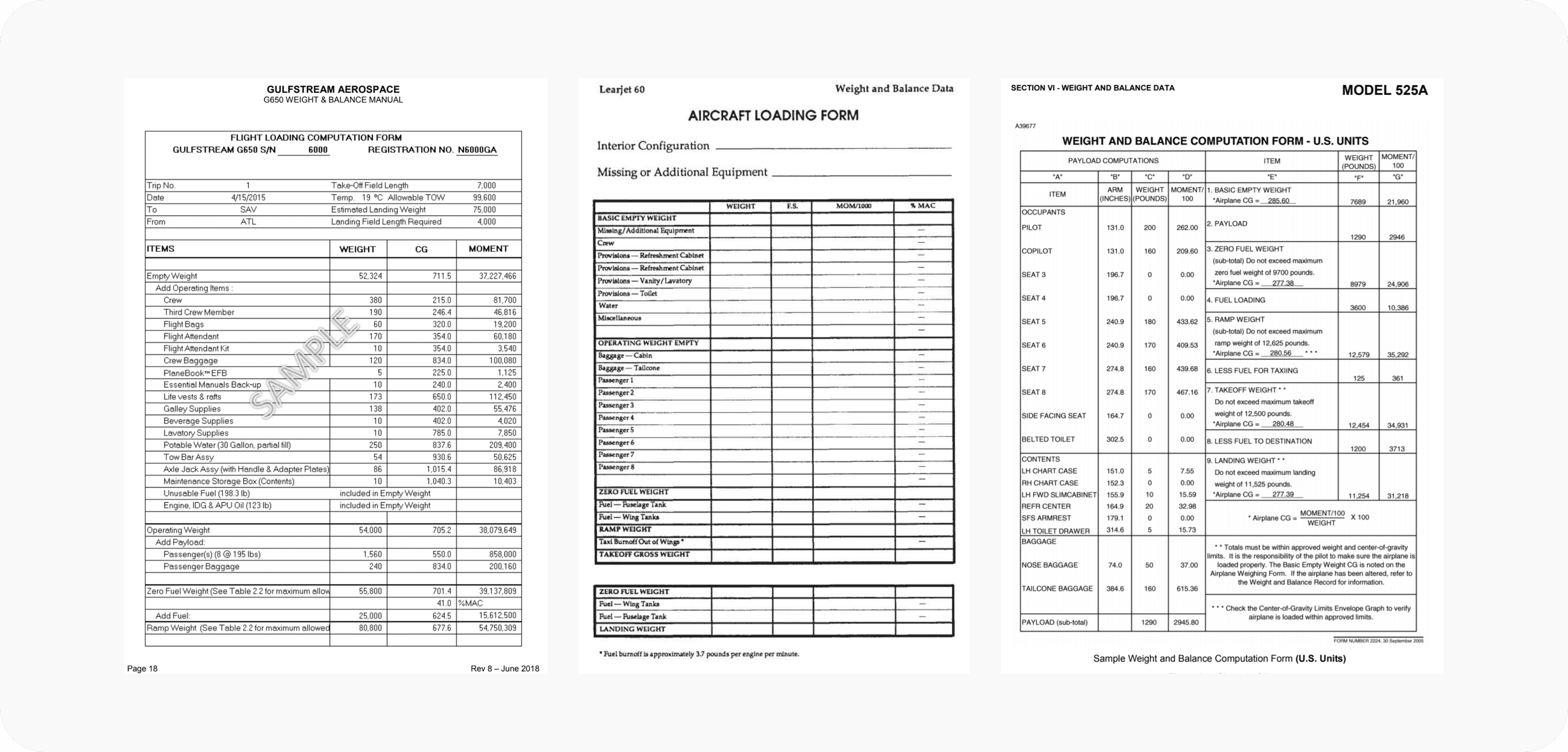
A fundamental pre-flight task for pilots involves the calculation of an aircraft's weight and balance, a critical procedure to ascertain that the aircraft falls within safe weight parameters during takeoff and landing.
The previous weight and balance engine in ForeFlight served the specific purpose of catering to general aviation pilots operating small aircraft with limited crew. However, as ForeFlight expanded its scope beyond general aviation, the imperative to design a new and enhanced weight and balance engine became evident to align with the evolving business strategy. I was tasked to create that integration by taking the best from the old and enhancing it with the new profile based logic.
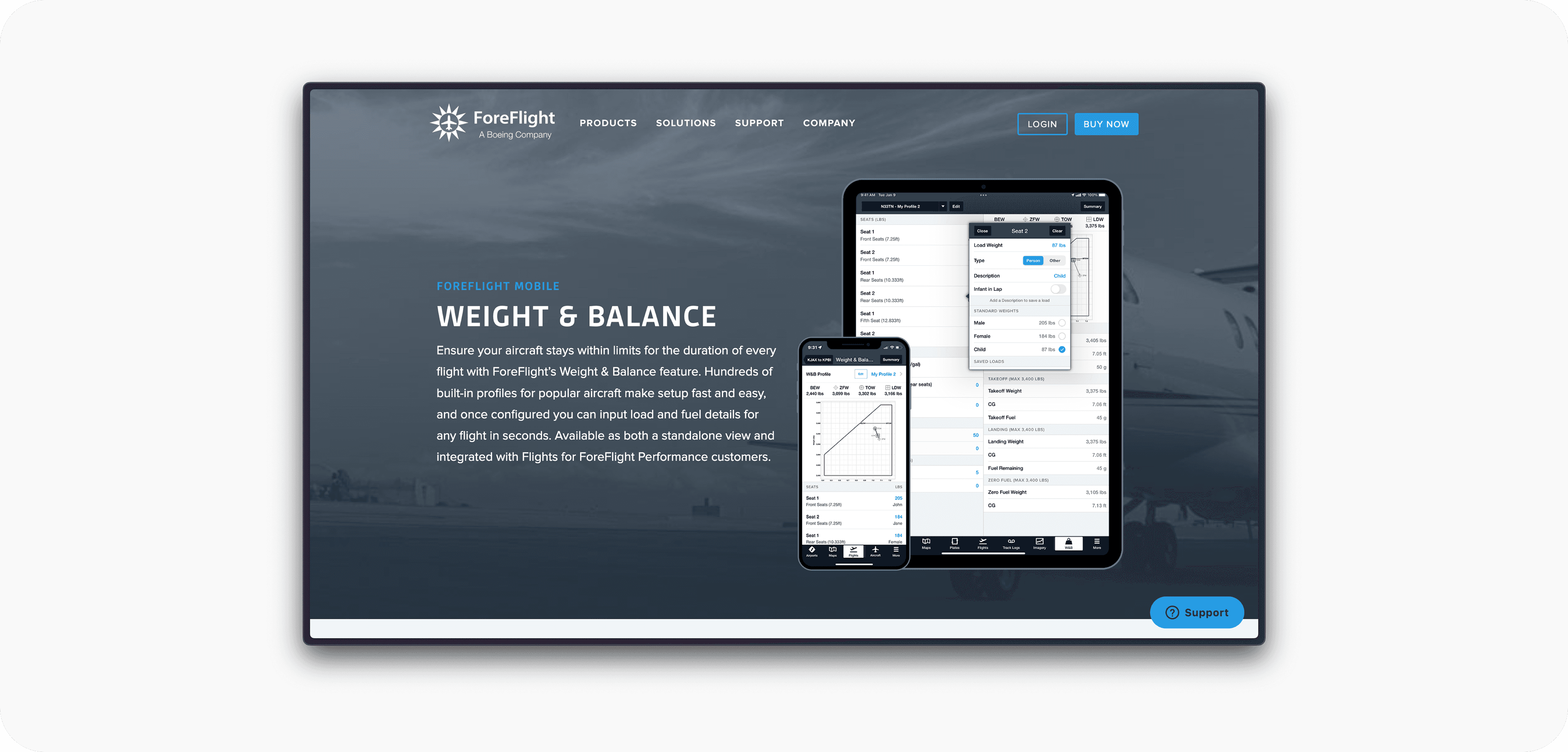
Researching New Functionalities
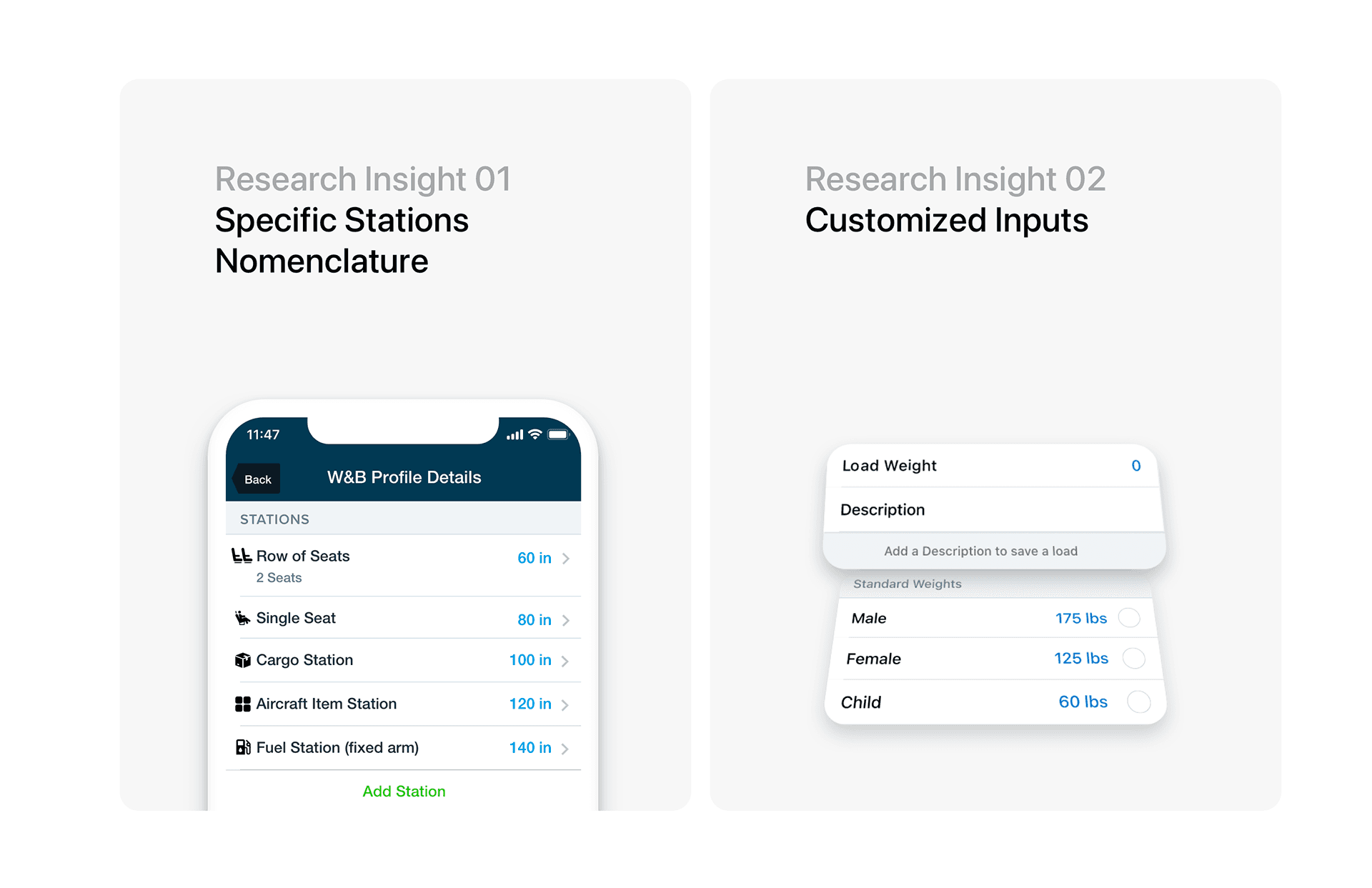
Through secondary research and literature review, I delved into uncovering the varied nomenclature associated with different user personas, including GA, BA pilots, and USAF pilots. Pilots often used the terms "loads" and "stations" interchangeably, influenced by their diverse experiences and educational backgrounds.
Clear Nomenclature
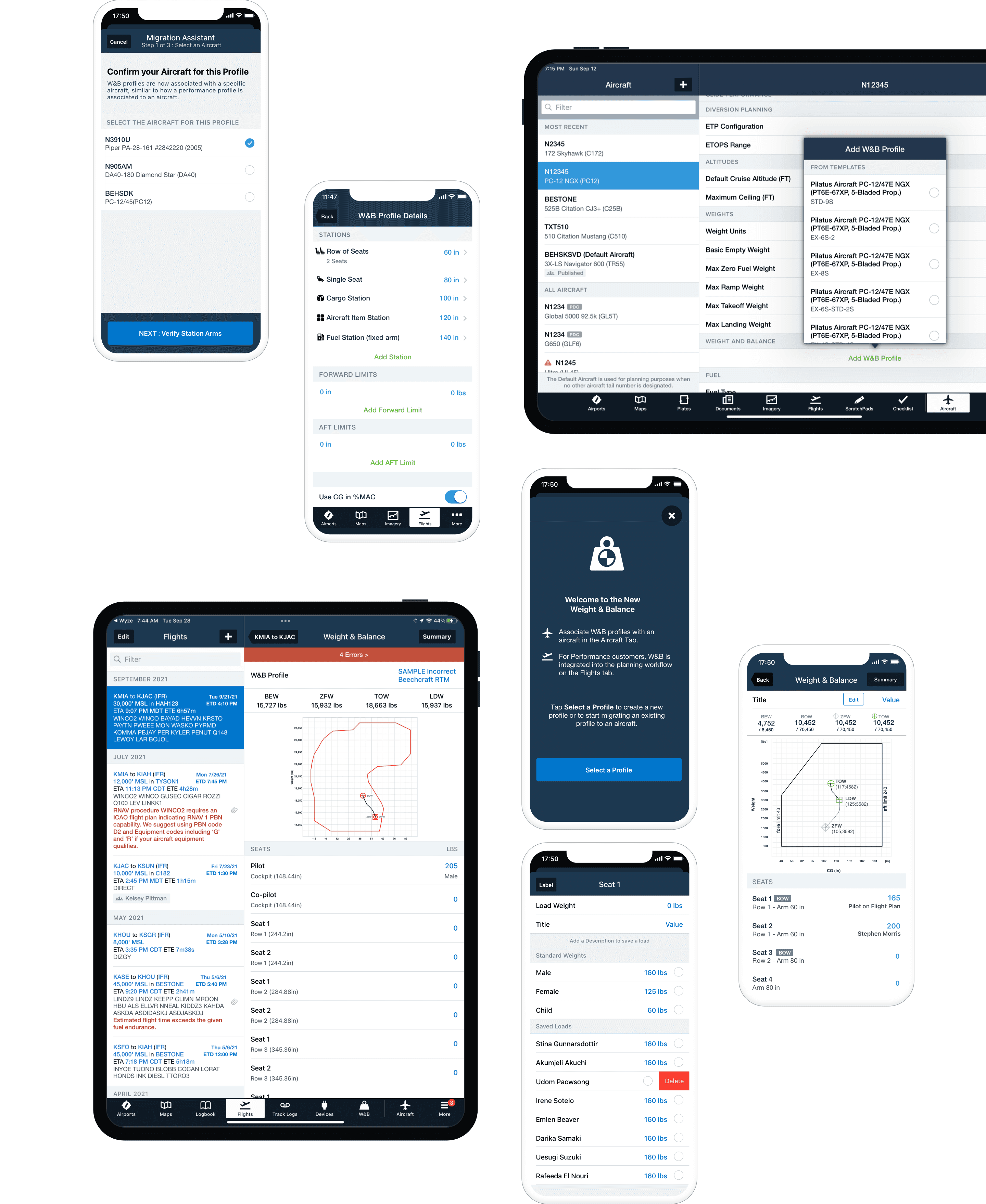
To address the confusion surrounding the terms "load" or "station," I devised specific nomenclature for each load category, such as Single Seat, Row of Seats, Fuel Tank, Cargo Station, and Aircraft Items.
Customizable Loads
During the analysis of the current weight and balance solution, I observed that not only were people occupying seats, but objects were also common. Consequently, I incorporated a customizable field to account for any non-person or non-station loads within the aircraft.
Standard Weights
Understanding that business aviation pilots might prefer not to inquire about passenger weights, I integrated standard FAA values for different passenger types. These standardized weights serve as easily accessible templates during the loading process.
Preserving Legacy Design Patterns
Through an audit of the current UI, I gained insights into its value and identified its shortcomings. My approach was to maintain the existing element positioning while selectively expanding those requiring additional functionality.
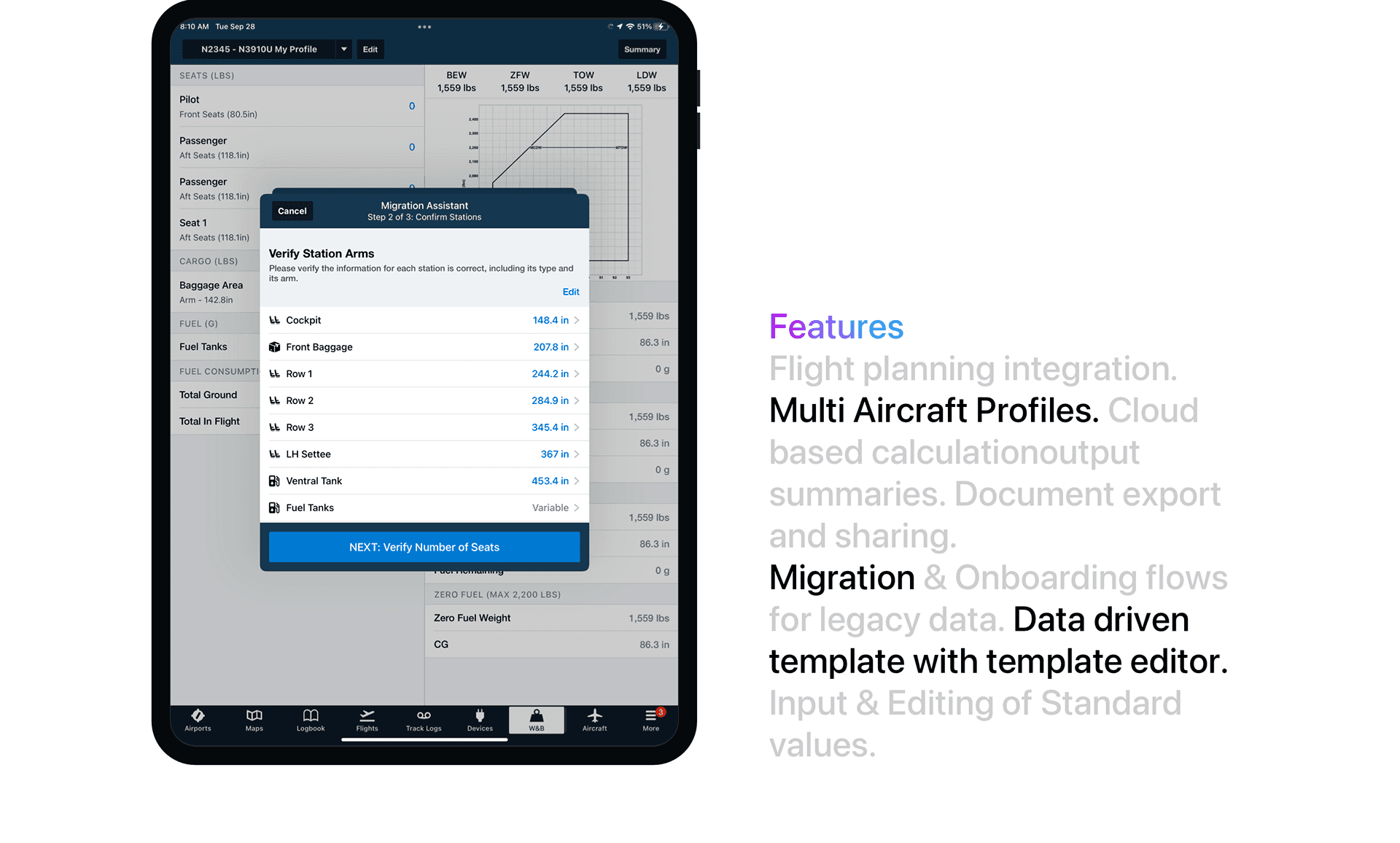
Migration Data Assistant
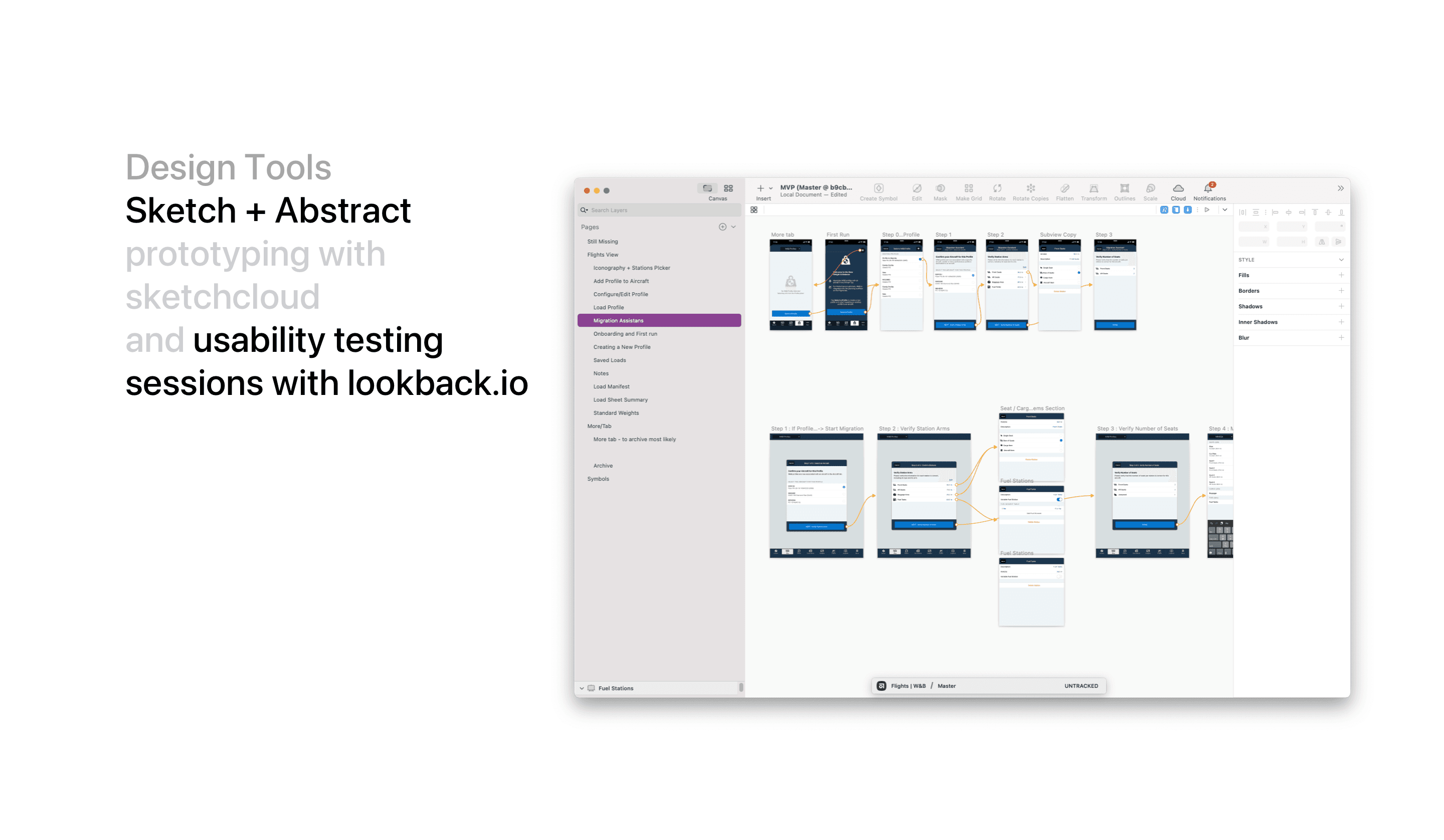
The revamped W&B aimed to overhaul the underlying logic to accommodate multiple aircraft profiles. This necessitated the design of seamless flows to ensure a smooth transition of legacy data to its new location. Additionally, I developed onboarding flows to facilitate a clear understanding of the changes for users accustomed to a feature utilized by pilots since 2010.
Mirroring the design on the web
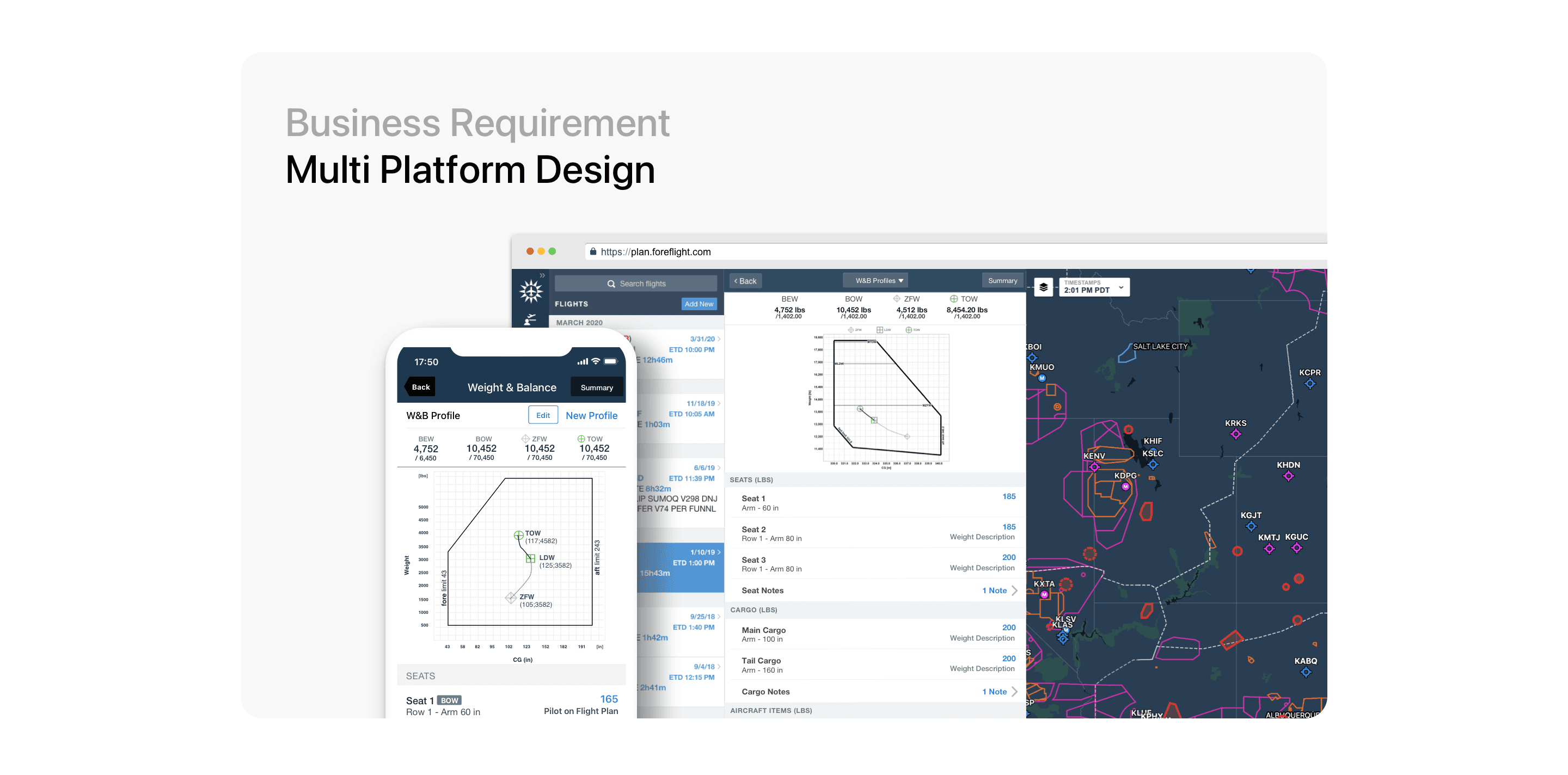
The weight and balance calculations were primarily intended to be conducted pre-departure. Pilots had the option to complete all tasks before boarding the airplane and then make minor adjustments using their iOS devices. In some instances, dispatchers would create the entire flight and carry out all necessary calculations. To cater to this specific use-case, I had to adapt the iOS design for W&B on the Web to facilitate easy editing and access.
When crafting the design for the Web, my primary focus was on preserving the overall logic and layout of UX patterns. I utilized the available screen estate efficiently, consolidating options and settings directly within the fields for a streamlined and user-friendly experience